
IFTA and fuel tax
The quarterly return, built from loads you already ran
Per-state mileage, fuel purchases, and a print-ready report at the end of every quarter. Pull mileage from your ELD, estimate it from the route, and import fuel purchases instead of typing receipts.
14-day free trial · No credit card charged today
The problem
IFTA quarter is a weekend nobody looks forward to
The return needs two numbers per state: miles run there and fuel bought there. Both of those exist. They are just scattered.
The miles are in the ELD, or in the trip sheets, or in the driver's memory. The fuel is in a shoebox, or in a fuel card statement in a format nobody can work with, or on receipts that faded in the sun on the dash. Somebody spends a Saturday with a highlighter and a state map, adds it up, and hopes it is close.
It is a data assembly problem dressed up as a tax problem. The information was captured. It was just never captured in a form you could add up.
How it works
Three inputs, one report
Mileage
Three ways to get it in, and you can mix them.
ELD mileage import
Bring the miles in from your electronic logging device instead of reconstructing them.
Route-based estimation
RovexOne estimates per-state mileage from the load’s pickup and delivery, which covers the gaps and gives you a starting point on loads where the ELD data is thin.
Manual entry
Enter or adjust any leg directly when you need to.
Fuel purchases
Import them rather than key them. TCS fuel card transactions pull in over FTP automatically, and fuel purchase import handles the rest. Every purchase carries its state, so it lands in the right jurisdiction.
The quarter
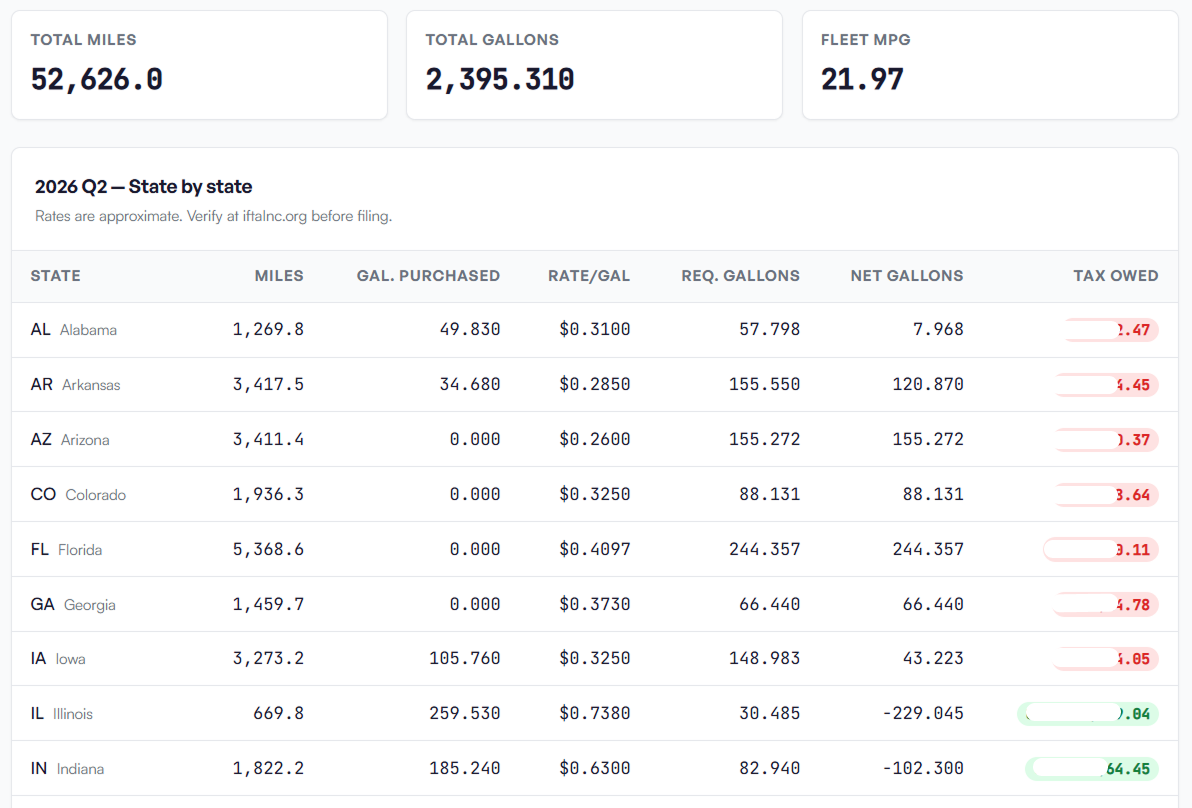
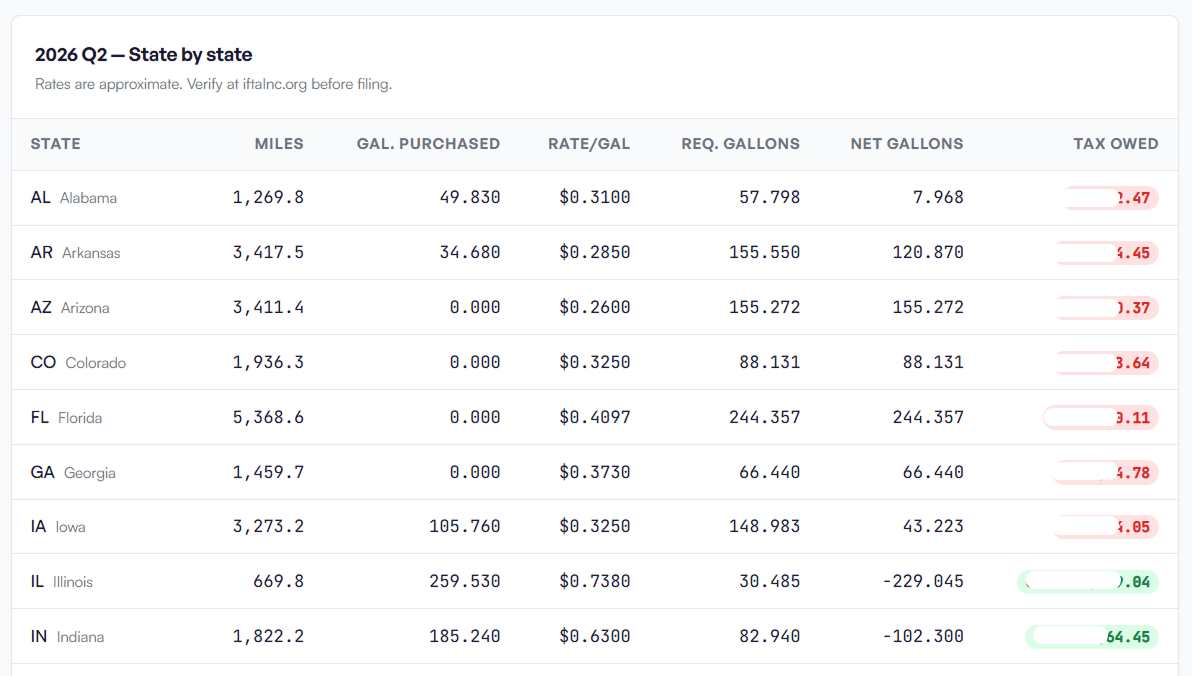
Pick the reporting period and the report builds: miles by state, fuel by state, per truck. Print-ready output for filing.
Per-state breakdown
Every state, every truck
The report breaks out mileage by state and by truck, which is what your base jurisdiction wants and what you need if anything gets questioned later.
Running per-truck matters more than carriers expect. When a return gets audited, the question is almost never about the total. It is about one unit in one quarter, and being able to pull that unit's miles and fuel separately is the difference between a short conversation and a long one.
Connected data
Nothing gets entered twice
The reason IFTA is painful in a spreadsheet operation is that the mileage data and the fuel data were never connected to the loads. In RovexOne they are the same records.
The load you dispatched carries the pickup and the delivery, which is where route-based mileage comes from. The fuel expense you logged against that truck carries the state and the gallons. The fuel card import writes into the same expense records that feed your cost per mile and your per-load profit.
So the IFTA return is not a separate exercise. It is a view of data you generated running freight.
Background
The short version
The International Fuel Tax Agreement is an arrangement among the lower 48 US states and 10 Canadian provinces that lets a carrier running in more than one jurisdiction file a single quarterly fuel tax return with its base jurisdiction instead of filing separately in every state it touched.
Who has to file
Carriers operating a qualified motor vehicle across jurisdiction lines. In general that means a vehicle over 26,000 pounds gross vehicle weight, or one with three or more axles regardless of weight.
What the return needs
Total miles run in each jurisdiction, and total fuel purchased in each jurisdiction, for the quarter.
When it is due
| Quarter | Period | Return due |
|---|---|---|
| Q1 | January to March | April 30 |
| Q2 | April to June | July 31 |
| Q3 | July to September | October 31 |
| Q4 | October to December | January 31 |
Confirm current deadlines and requirements with your base jurisdiction. They set the rules, not us.
Pricing
IFTA report is on every plan, including the $34.95 one
A lot of TMS products put IFTA behind a mid-tier plan or sell it as a separate module. RovexOne does not have feature tiers. Core runs the same IFTA engine as Premium. Plans set capacity: trucks, drivers, dispatcher seats, and AI rate con parses per month.
If you are an owner-operator running one truck across state lines, IFTA is probably the single most annoying recurring task you have. It is included.
| Plan | Monthly | Fleet | Drivers | Dispatcher seats | AI parses / month |
|---|---|---|---|---|---|
| Core | $34.95 | 1 to 2 trucks | 4 | 1 | 20 |
| Starter | $79.95 | 3 to 7 trucks | 14 | 2 | 60 |
| Pro | $149.95 | 8 to 14 trucks | 28 | 4 | 150 |
| Premium | $198.00 | 15 to 24 trucks | 48 | 6 | 500 |
| Enterprise | Custom | 25+ trucks | Custom | Custom | Custom |
What is included
Every IFTA feature, on every plan
- Quarterly fuel tax reporting by period
- Per-state mileage breakdown
- Per-truck breakdown
- ELD mileage import
- Route-based mileage estimation from load pickup and delivery
- Manual mileage entry and adjustment
- Fuel purchase import
- TCS fuel card transactions over FTP
- Print-ready report output
- Fuel data shared with expense tracking and per-load profitability
FAQ
Questions about IFTA
No. It builds the report with your per-state mileage and fuel purchases in print-ready form. You file it with your base jurisdiction.
Get started today
Build last quarter and check it against what you filed
Import your fuel and your miles for a quarter you have already filed and compare. It is the fastest way to see whether this saves you the weekend.
14-day free trial · No credit card charged today · Cancel anytime
RovexOne produces IFTA reports from the mileage and fuel data in your account. It does not file returns on your behalf and it is not tax advice. Filing requirements, rates, and deadlines are set by your base jurisdiction. Confirm your obligations with your base jurisdiction or your accountant.